Why Early-Career Professional Are Rethinking Big Corporations
The prestige myth, the reality of bureaucracy, and the value of hands-on work early

The Prestige Myth
You did it. You stood toe to toe with the college education system, and you won. And you were given absolutely no time to appreciate the work you’ve done because just like every one of your classmates, you are scrambling to line up a job.
All through college you heard about ‘so-and-so’s sister, who landed a job at Nike right out of school’ or ‘what’s-his-names brother whose internship at Google turned into a full-time career’.
Suddenly that graduation date stops feeling like a finish line, and more like a sentencing date because you realize that college degree doesn’t guarantee a job anymore.
That you are battling a crowd of hundreds, sometimes thousands, of other applicants fighting for that same exact spot.
For weeks you’ve filled out application after application, submitting resumes and perfectly crafted cover letters to any job posting you can find.
Weeks pass. Sometimes months.
Maybe you hear nothing back.
Maybe you get an automated rejection at 2:00 a.m.
Maybe you start wondering if you’re doing something wrong.
It’s stressful — especially when it feels like you’re supposed to have something lined up before graduation even happens.
And that’s where the real frustration begins:
Not just finding a job… But finding a place where you’ll actually get to grow once you do.
Why It Feels So Impersonal
The silence usually isn’t personal. It’s math.
Big-name employers can get hundreds — sometimes thousands — of applications for a single early-career opening. To handle that kind of volume, they don’t rely on people first. They rely on systems: applicant tracking software, automated screens, standardized hiring steps designed to move fast and reduce risk.
From the company’s side, it’s efficient.
From your side, it can feel like you’re being processed.
Your résumé gets scanned before it’s read.
Your keywords matter more than your story.
Your application becomes one data point in a massive queue.
And even when you do everything “right,” the experience can still feel oddly distant: generic confirmation emails, slow timelines, little feedback, and decisions happening behind layers you’ll never see.
None of that makes large organizations “bad.” That’s just how scale works.
But scale changes the early-career experience in a way most people don’t anticipate.
Because the same thing that shapes the hiring process often shapes the job itself.
Large organizations are built on specialization. Roles are carefully defined. Responsibility is segmented. Early-career positions can be intentionally narrow — not because you’re not capable, but because the machine runs best when everyone stays in their lane.
For some people, that structure is a relief. Clear scope. Clear process. Clear path.
For others, it can feel like the job search followed them inside:
waiting to be trusted, waiting to take ownership, waiting to do work that actually stretches them.
And that’s the moment a lot of early-career professionals start rethinking the default advice.
Not because big companies don’t have opportunity — they do.
But because they’re asking a different question now:
Where will I actually get to build?
The Reality of Large Corporations
Once you’re inside a large corporation, you quickly learn something that isn’t obvious from the outside:
big companies aren’t built to move fast — they’re built to move consistently.
That consistency has real benefits. There are proven processes, established teams, and usually no shortage of resources. You may get formal training, clear titles, and a brand name that carries weight. For a lot of people, that structure is reassuring.
But the same structure that makes a corporation stable is also what shapes your day-to-day reality—especially early on.
In a big organization, work is divided into lanes. That’s how scale works. Your job might be one slice of a bigger system—one component, one phase, one set of documents, one report, one workflow. You can become very good at that slice, very quickly.
What you may not get quickly is the full picture.
A “simple” change can require multiple approvals: your manager, another department, a program lead, a quality review, sometimes legal or compliance. Nobody is trying to slow you down—risk management is part of the machine. But it means progress often comes in meetings, checkpoints, and timelines instead of momentum.
This is the part that surprises a lot of early-career professionals: even when you’re capable, ownership is usually earned slowly. Not because you don’t have talent, but because the system is designed to protect outcomes. The company wants predictability, and predictability often means letting people prove themselves over time before they hold bigger pieces of the work.
In a large corporation, leadership is often several levels away from the work. Your impact can be real, but it may feel indirect. You might contribute to something important without ever seeing the full result—or knowing how much your contribution mattered.
None of this means large corporations are “bad.” For the right person, it’s a great environment.
But it does explain why so many early-career professionals hit the same feeling after the excitement wears off:
I’m learning… but I’m also waiting.
And in the first few years of your career, that tradeoff matters more than most people realize.
The Hidden Cost of Waiting
Waiting doesn’t feel like a problem at first. In the beginning, it can even feel responsible — “I’m paying my dues.” You’re learning the tools, figuring out how meetings work, getting used to professional expectations. That’s normal.
The cost shows up later, quietly.
Because the first few years of your career are compounding years. What you do (and don’t do) early on shapes:
- the skills you build fastest
- the work you get trusted with next
- the stories you can tell in interviews
- the confidence you develop from owning outcomes
When you spend those years in a narrow lane, the risk isn’t that you learn nothing — it’s that you learn too little of the whole. You get really good at a slice of the work, but you don’t get many chances to connect the dots: why decisions get made, how tradeoffs happen, what “good” looks like end-to-end.
And over time, “waiting” can turn into a pattern:
Waiting for responsibility.
Waiting to be included.
Waiting to feel like your work matters.
Waiting for your career to start moving.
That has a real opportunity cost. Not just emotionally — professionally.
Early-career momentum often comes from doing the hard things while you’re still new: presenting, owning a deliverable, solving problems across teams, learning how decisions get made, seeing a project through. Those experiences become your accelerators later.
So when people say they’re rethinking big corporations, it’s rarely because they hate structure.
It’s because they don’t want the first years of their career to feel like a warm-up lap.
They want to build now.
What High-Impact, Independent Companies Offer Instead
This is where a different type of employer starts to look really attractive — not “small for the sake of small,” but high-impact and independent: organizations that are specialized enough to do meaningful work, and agile enough to let early-career professionals contribute sooner.
The biggest difference is usually access.
In high-impact, independent environments, you’re closer to:
- the product
- the process
- the decisions
- the people who own outcomes
That changes everything.
Roles tend to be broader, not because expectations are unreasonable, but because the work isn’t split into twenty micro-functions. You’re more likely to see how engineering connects to manufacturing, how project plans connect to delivery, how systems connect to real-world operations, how customer needs translate into design choices.
You also tend to get faster feedback loops:
- a shorter path from “idea” to “try it”
- quicker visibility into what worked and what didn’t
- more direct coaching because you’re not six layers removed
To be clear, there are tradeoffs. Independent companies may not have the same brand-name prestige or massive support infrastructure. You may have to be more proactive. You may have to ask questions, speak up, and take ownership instead of waiting for a formal program to hand it to you.
But for a certain kind of early-career professional — the kind who wants momentum — those tradeoffs are actually the point.
Because the value isn’t “being in a big system.”
The value is being in a place where you can grow through responsibility.
How it Looks in the Real World
This “waiting vs. building” difference isn’t abstract — it shows up in everyday work, especially in roles like the ones many early-career professionals are pursuing.
A Product Development Engineer in a large corporation might spend months focused on a tightly defined task within a larger program. In a high-impact, independent environment, that same engineer may get exposure to the full arc: design choices, testing, manufacturability discussions, and real-time problem-solving when something doesn’t behave the way it should.
A Project Manager / Program Manager in a large organization might mainly manage status reporting and coordination within a rigid template. In a high-access environment, project leadership often means driving real cross-functional alignment — working directly with engineering, operations, supply chain, and leadership to remove blockers and move projects forward.
And a Sales Applications Engineer can either be boxed into quoting and handoffs… or be part of the solution loop — translating real application needs into technical collaboration, learning quickly because the feedback is direct and the impact is visible.
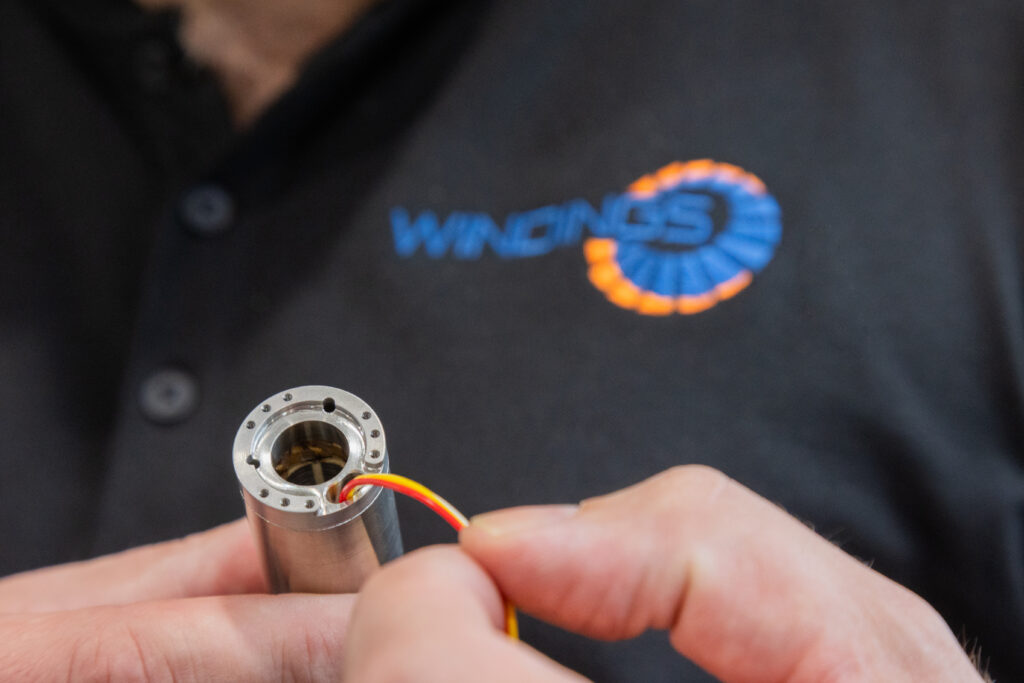
In specialized manufacturing environments — including companies like Windings — these roles often sit closer to the work itself. The pace isn’t “chaotic.” It’s just more direct. You can see what you’re working on, who it affects, and why it matters.
That’s the kind of experience that turns a first job into a launchpad.
If you’re early in your career, it’s tempting to treat the job search like a brand hunt — find the biggest name, get in, and hope growth follows.
But more people are starting to optimize for something else:
access, ownership, and momentum.
Because the question isn’t really “What company will look best on my résumé?”
It’s:
“Where will I build the skills and stories that make my résumé matter?”
If you’re evaluating opportunities right now, ask yourself:
- Will I get meaningful responsibility in my first 12–18 months?
- Will I be close to the work — not just the process?
- Will I learn the full picture, or only a small slice?
- Is growth earned through contribution… or mainly through time served?
Big corporations can be a great fit for the right person. But if you’re the kind of professional who wants to build early, lead sooner, and grow through doing — don’t overlook high-impact, independent organizations that are designed for momentum.
Sometimes the strongest start isn’t about the biggest logo.
It’s about finding a place that lets you start building right away.
Find out more here https://www.windings.com/careers/