Early Career Growth: Build or Wait?
Why early career growth depends on ownership, not just opportunity
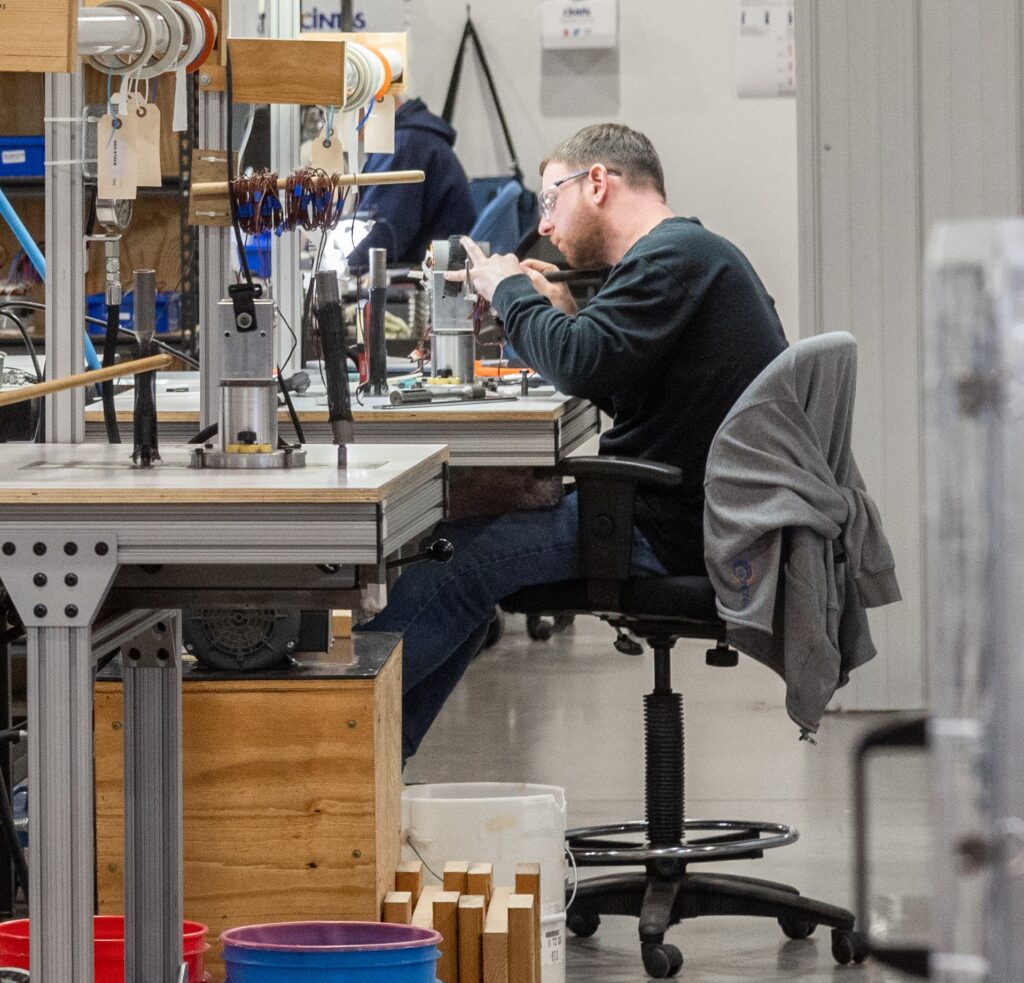
Why early career growth often depends more on environment than talent
Early career growth doesn’t just depend on talent — it depends on the environment that shapes what you’re allowed to build. When you start your career, you assume you’re learning how to do your job.
And you are.
But you’re also learning something else — something more subtle.
You’re learning how your environment expects you to move.
In many large organizations, what you quietly learn first isn’t how to build.
It’s how to wait.
Wait for approvals.
Wait for alignment.
Wait for your manager.
Wait for budget.
Wait for your turn.
None of that feels harmful at first. It feels professional. Responsible. Mature.
But early career growth doesn’t just depend on effort or intelligence. It depends on what behaviors your environment rewards — and what skills you’re practicing every day.
Because you don’t just become what you intend.
You become what you repeatedly do.
And if you spend your early career practicing patience more than ownership, you may be developing a very different skill set than you think.
What Big Companies Actually Teach You (And Why)
Let’s start here: big companies are not the enemy.
They teach valuable things.
They teach process discipline.
They teach documentation rigor.
They teach risk management.
They teach stakeholder communication.
They teach polish and brand awareness.
They teach you how to operate inside a complex system.
Those are real skills.
In a large organization, consistency matters. Risk tolerance is lower. Mistakes scale quickly. When thousands of employees touch a process, predictability becomes essential.
So systems are built to protect outcomes.
Work is divided into specialized lanes.
Decision-making is layered.
Authority is clearly defined.
Changes require alignment.
From a business standpoint, this makes sense.
But here’s the unintended side effect:
You often learn escalation before decision-making.
You learn how to prepare decks instead of drive outcomes.
You learn how to navigate internal systems before you learn how to build something from scratch.
This is where the conversation about small company vs big company career growth becomes important.
Because big companies optimize for stability.
Smaller, high-impact companies often optimize for momentum.
And for early career growth, that difference compounds quickly.
What “Learning to Wait” Looks Like in Practice
No one says, “We’re teaching you to wait.”
It just happens.
You manage updates instead of owning deliverables.
You prepare status slides instead of solving root problems.
You’re included in meetings, but rarely in the decision.
You own a piece of the system — not the system itself.
Again, this doesn’t mean the work lacks value. It means your scope is intentionally narrow.
Over time, you become excellent at navigating the machine:
- You know who needs to be cc’d.
- You know the approval chain.
- You know the templates.
- You know how to avoid stepping outside your lane.
Those are navigational skills.
But early career growth accelerates when you’re building — not just navigating.
Because building forces you to:
- Make decisions with imperfect information.
- Connect functions across teams.
- Solve problems instead of routing them.
- See the consequences of your work directly.
And if you don’t get those reps early, you don’t just delay experience.
You delay confidence.
What Smaller, High-Impact Companies Teach Instead
Smaller organizations — especially specialized, high-impact environments — operate differently.
Not because they’re chaotic.
Because they’re closer to the consequences.
In these environments, there’s often less room for pure specialization early on. Work isn’t split into twenty micro-functions. Roles tend to be broader out of necessity.
And that changes what you learn.
You learn to solve problems directly.
You learn to connect engineering to operations, operations to supply chain, supply chain to delivery.
You learn to ship improvements, not just suggest them.
You learn how tradeoffs actually work — cost vs. schedule vs. performance vs. quality.
This is where hands-on experience early career becomes real.
Instead of observing how a system functions, you participate in shaping it.
Feedback loops are shorter.
If something doesn’t work, you see it quickly.
If something improves, you see that too.
And because outcomes depend on contribution, responsibility often moves faster.
You don’t automatically get a bigger title.
But you often get more ownership.
And ownership is the engine of early career growth.
Builder vs. Navigator: Two Different Career Paths
It helps to think of this contrast in simple terms.
The Navigator
The Navigator excels inside structure.
They manage complexity well.
They understand internal politics.
They know how to align stakeholders.
They protect process.
They escalate appropriately.
In large organizations, Navigators thrive.
The Builder
The Builder thrives in motion.
They create clarity where there isn’t any.
They take ownership before being asked.
They connect dots across silos.
They improve broken systems.
They solve instead of escalate.
Builders often get more responsibility at work because they demonstrate the ability to handle outcomes — not just tasks.
Both skill sets are valuable.
But here’s the key:
Early career growth compounds faster when you build first.
Because building forces you to develop judgment.
And judgment is what creates long-term leverage.
The Hidden Cost of Learning to Wait Too Long
Waiting isn’t neutral.
It feels safe. It feels stable. It feels like you’re paying dues.
But there’s an opportunity cost.
If you spend the first three to five years of your career primarily navigating systems instead of building within them, several things happen:
- Your scope stays narrow.
- Your cross-functional exposure stays limited.
- Your ownership stories stay thin.
- Your confidence develops slowly.
- Your mobility depends more on tenure than output.
Meanwhile, someone in a more high-access environment might:
- Own a deliverable end-to-end.
- Lead a cross-functional initiative.
- Improve a process that impacts cost or delivery.
- Present directly to decision-makers.
- Solve operational problems firsthand.
By year three, those two résumés look very different.
This is why the small company vs big company career growth question matters so much early on.
It’s not about prestige.
It’s about reps.
And reps compound.
Waiting is a skill.
But it’s rarely the one that accelerates you.
How to Know If You’re in a Waiting Environment
If you’re evaluating your current role — or choosing your next one — here are signals to watch.
Signs You’re Learning to Wait
- Decisions require multiple layers of approval.
- Your scope hasn’t meaningfully expanded in 12 months.
- You’ve never owned a deliverable from start to finish.
- Promotions are primarily timeline-based.
- Most of your energy goes toward alignment, not execution.
- You escalate problems more often than you solve them.
These environments can still be stable, prestigious, and structured.
But they may slow early career growth.
Signs You’re Learning to Build
- You own real outcomes, not just inputs.
- Your manager pushes responsibility toward you.
- You see the impact of your work directly.
- You’re solving cross-functional problems.
- Your growth is contribution-based, not time-based.
- You’re gaining consistent hands-on experience early career.
This doesn’t require chaos.
It requires proximity to consequences.
Because proximity forces development.
What This Looks Like in Specialized Manufacturing
Specialized manufacturing environments are a strong example of builder-friendly systems.
The work is tangible.
Quality, cost, and delivery aren’t abstract metrics — they’re operational realities.
When a process breaks, it’s visible.
When a specification is unclear, production feels it.
When lead times slip, customers notice.
That creates a natural environment for building.
Engineering connects directly to manufacturability.
Documentation affects execution.
Project management drives real alignment.
Business systems impact workflow efficiency.
Applications engineering ties customer need to technical solution.
In these environments, early career growth often happens faster because you can’t hide from outcomes.
You see what works.
You see what doesn’t.
And when you improve something, the improvement is measurable.
That kind of hands-on experience early career builds judgment quickly.
It also builds credibility.
Because results are visible.
Choosing the Skill You Want to Compound
The point isn’t that big companies are wrong.
They’re structured for scale.
The point isn’t that small companies are always better.
They come with tradeoffs too — fewer layers of support, less infrastructure, more ambiguity.
The real question is this:
What skill do you want to compound early in your career?
Do you want to become exceptional at navigating complexity within established systems?
Or do you want to become exceptional at building solutions, owning outcomes, and driving improvement?
Because whichever environment you choose, that’s the muscle you’ll train.
And in the first few years, that training matters more than most people realize.
If you’re evaluating your next move, ask yourself:
- Am I getting meaningful reps?
- Am I gaining early career growth through ownership?
- Am I learning how to get more responsibility at work — or how to wait for it?
- Am I accumulating real stories of impact?
- Is my growth tied to contribution or tenure?
Big companies often teach you how to wait.
Smaller, high-impact ones often teach you how to build.
Neither path is automatically right.
But early in your career, momentum compounds.
And you don’t become a builder by waiting long enough.
You become one by building.
Learn more about getting hands-on work faster here: https://www.windings.com/careers/